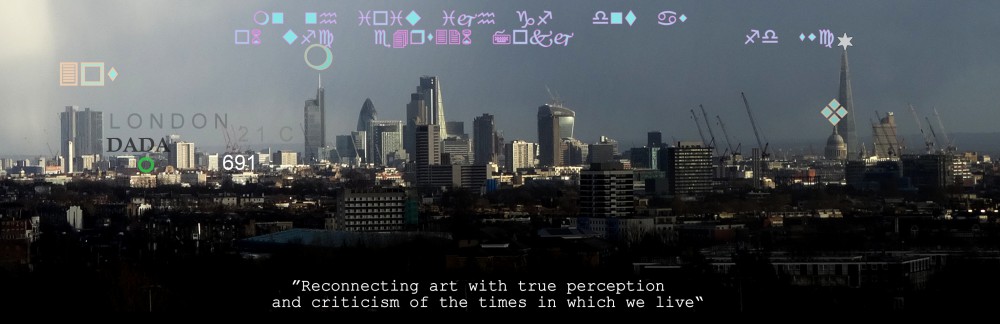
London Dada is a contemporary revival or reinterpretation of the Dada art movement, specifically rooted in the United Kingdom, with its focus on the early 21st Century
The original Dada movement emerged in Zurich around 1916 as a radical, anti-establishment response to the horrors of World War I, characterized by an over-arching war protest spirit, its embrace of focused absurdity, satire, and rejection of traditional artistic norms were its inclusive by-products that initiated a sea-change in 20th C. art.
London Dada, while not part of the historical Dada movement (which had hubs in cities like Zurich, Berlin, Paris, and New York but notably lacked a significant presence in the UK at the time), seeks to channel its spirit into a modern British context.
Founded in 2005 by multimedia artist Michael St. Mark, London Dada positions itself as the “missing link” in the UK’s art history, aiming to embody the original Dada principles laid out by Hugo Ball—namely, using art as a tool for “true perception and criticism” of contemporary society. It critiques the entrenched elitism, commercialism, and conformity St. Mark and others see in the British art establishment. Unlike the nihilistic tendencies often associated with historical Dada, London Dada emphasizes a moral and socially engaged stance, leveraging photography and digital platforms as its primary mediums. These tools allow for spontaneous, accessible commentary on political, social, and cultural issues, aligning with Dada’s tradition of chance, immediacy and subversion, but updated for the 21st century.
London Dada has been notably active online, pioneering the now ubiquitous online art gallery format and using platforms like blogs and social media to share works that often blend sharp wit with poignant observation—think street photography with provocative titles that reveal the absurdities or tragedies of modern life. It positions itself as a counterpoint to what its proponents call a “closed shop” of UK art dominated by profit-driven cliques, aiming to spark an “art spring” of innovation and fearless expression. While it lacks the international scope of the original Dada, its London expression reflects a renewed effort to resurrect its revolutionary ethos in a digital, post-industrial Britain.
“ An artwork must possess intrigue and pose a question in the mind of the viewer to have any appreciable meaning, otherwise it’s merely another time-honoured pretty picture or special effect ( retinal ) – which is ok, I suppose... ” – M.St.M
_________________________________________________________________________

Hugo Ball, 1886 – 1927
Father of Dada and instigator of Cabaret Voltaire, Zurich 1916
” Art, for us, is not an end in itself, but an opportunity for true perception and criticism of the times in which we live”
” Our art is a burning search for the buried face of this age, for the possibility of it being stirred, awakened “
” The Dadaist wages war against the agony of our age and its intoxication with death.”
” The Dadaist is convinced of the overall connection between all entities and beings ..” – Hugo Ball
” We never believed in the masses; we believed in the development of the individual ” – Richard Heulsenbeck
” For the disillusioned artists of the Dada movement, World War 1 merely confirmed the degradation of social structures that led to such violence: corrupt and nationalist politics, repressive social values, and unquestioning conformity of culture and thought – regressive factors that are still present to a large degree today ” – M. St.M
Founded in 1916 at Cabaret Voltaire in Zurich by the German writer, musician-philosopher and mystic Hugo Ball, the seminal art movement known as Dada, by 1922 had as its diverse European hub-expressions Zürich, Paris ( Tzara, Picabia) , Barcelona, Cologne, Hanover ( Schwitters) and Berlin ( Huelsenbeck, Heartfield ) as well as of course NY Dada ( Duchamp, Man Ray ) – yet curiously no UK Dada expression was ever established, the only artists associated with the movement to live – briefly, 1941 – 47 – in the UK, Kurt Schwitters and John Heartfield – both having their ground-breaking art unappreciated and predictably ignored by the perennially elitist London art establishment and perhaps that explains why. In fact, it says everything about the entrenched longevity and depth of UK arts elitism that it wasn’t until 65 years after the artist’s death that Schwitters was offered a retrospective – and even then reference to deeply moral issues within his work, that might resonate with events going on at the time, were effectively redacted from the show.
.________________________________________________________________________
London Dada, as pretty much the major missing European representation of Dada, was conceived by Michael St.Mark in the fall of 2005 during a chance online chat exchange with fellow creative and YSP art director Phillip Simmons.
Founded under the inspiration of Hugo Ball’s original 1916 Cabaret Voltaire / Dada direction by multimedia artist and writer Michael St.Mark and in so doing pioneering the online art gallery genre via 6191 ( swiftly copied by Saatchi Online by summer 2006 ) – London Dada aspires to represent the glaringly absent UK expression in Dada’s international manifestations and to balance the convenient historical misunderstanding of Dada as a nihilistic nonsensical movement, by reviving the all too quickly abandoned ideals and aims of its founder Hugo Ball *, in pre-amping political, social and moral perceptions, innovations, criticism and protest within the highly elitist, terminally corrupt and insidiously-entrenched art establishment that perennially lord it over the moral and spiritual shipwreck that is early 21st century UK society ( See ** )
” *Hugo Ball, a former theatre director from Munich, was the initiator of the Cabaret Voltaire and thus automatically, so to speak, the father of the Dadaists. However, he left the movement just a few months later, as he felt that Dadaism was developing in the wrong direction. His initial euphoria for the new, noisy art movement gave way to incomprehension for the – as he described it – increasing nonsense of his Dada colleagues.” – “Who is Who in Dada” ( see links page )
_______________________________________________________________________
World-Changing Perceptions / Expressions in Art, Literature, and Performance
– A 2005- 2018 Update –
Dada; the cutting-edge scourge of the bourgeoisie of the day and undisputed catalyst for the sea change in art that occurred throughout the 20th C. finally has its missing-European-jigsaw-piece London expression – a 21st-century cyber and public art antidote for the hi-jacking, side-tracking and stifling of UK art into a tightly closed shop with multiple toughened glass ceilings run by a clique of old school tie cronies who use money as a means of rigging the art market into turning massive personal profits. Heading a network of kowtowing galleries, they render contemporary art virtually sterile by reducing them to little more than purveyors of the bawdy and the tawdry; selectively promoting through those evergreen guarantors of hype-to-order, the fawning career worths of the UK arts review media – a harem of hand-picked ‘shock or bore’ cash cow artists ( See ** )
As against .. ” For us, art is not an end in itself … but it is an opportunity for the true perception and criticism of the times we live in.” – Hugo Ball, founder of DADA, 1916.
‘True perception and criticism of our times’ – subjects considered almost taboo in UK art today, where rampant cronyism and self-serving politics within the most insidiously entrenched and brazenly divisive class system in the world blocks truth, innovation and free range of expression throughout the arts.
” The British (establishment ) are never comfortable with artists who think” – Adrian Hamilton, arts reviewer @ The Independent.
” The art business is nothing if not an insidious knickerless tart” – Mike von Joel, editor, State magazine.
The London Dada vision of this present arts and culture morass of conformist stagnation and stasis is the instigation of an ‘art spring’ – a 21st C. enlightenment that re-invigorates art with critical social commentary and a new direction that eschews the anachronistic mediocrity and the worn-out cogs of contemporary art.
Development sponsors are invited to invest in the London Dada brand and 6191 gallery – investors who feel passionately about the need for zeitgeist art that reflects current times, addresses moral and social issues and injustices; a fresh creative direction that critically engages and communicates rather than superficially entertains, baffles or nauseates. In short, art that re-connects with life, that offers fresh perceptions and thought-provoking narratives outwith the current unspoken stifling fear-based censorship of critical thought within UK art. St.Mark@londondada.com
“London Dada – fresh art with true perception and fearless moral protest, free of the straightjacket of tedium and sterile conformity”.
_____________________________________________________________________
THE SEVEN TENETS OF DADA
Represented by six bright green spots in hexagonal formation plus one central unifying spot representing the oneness or fundamental interconnection between all beings and things in the universe.
By Art Axis ( based on the founding group of Dadaists’ collective vision )

1. Radical art innovations
2. New art inventions/concepts
3. Morally-motivated peaceful art protest and fearless critical analysis of contemporary art
4. Perceptive societal and political commentary expressed through art.
5. Serendipity/chance or random art expressions
6. Humour ( dry, whimsical or sardonic )
7. Multimedia expressions of the interconnection between, or one-ness of, all beings and things. ( central green spot )
( At least one of the 7 tenets is present and often several in various combinations within Dada Works )
___________________________________________________________________
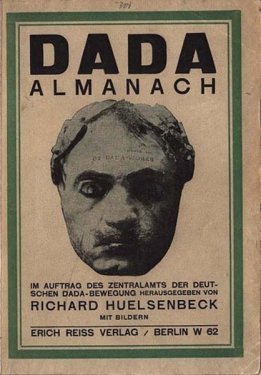
Click on the above link to hear the account of how Dada began and the movement’s original content,
history and core values, as related in an interview with its Zürich co-founder and leader of Berlin Dada; Richard Huelsenbeck.
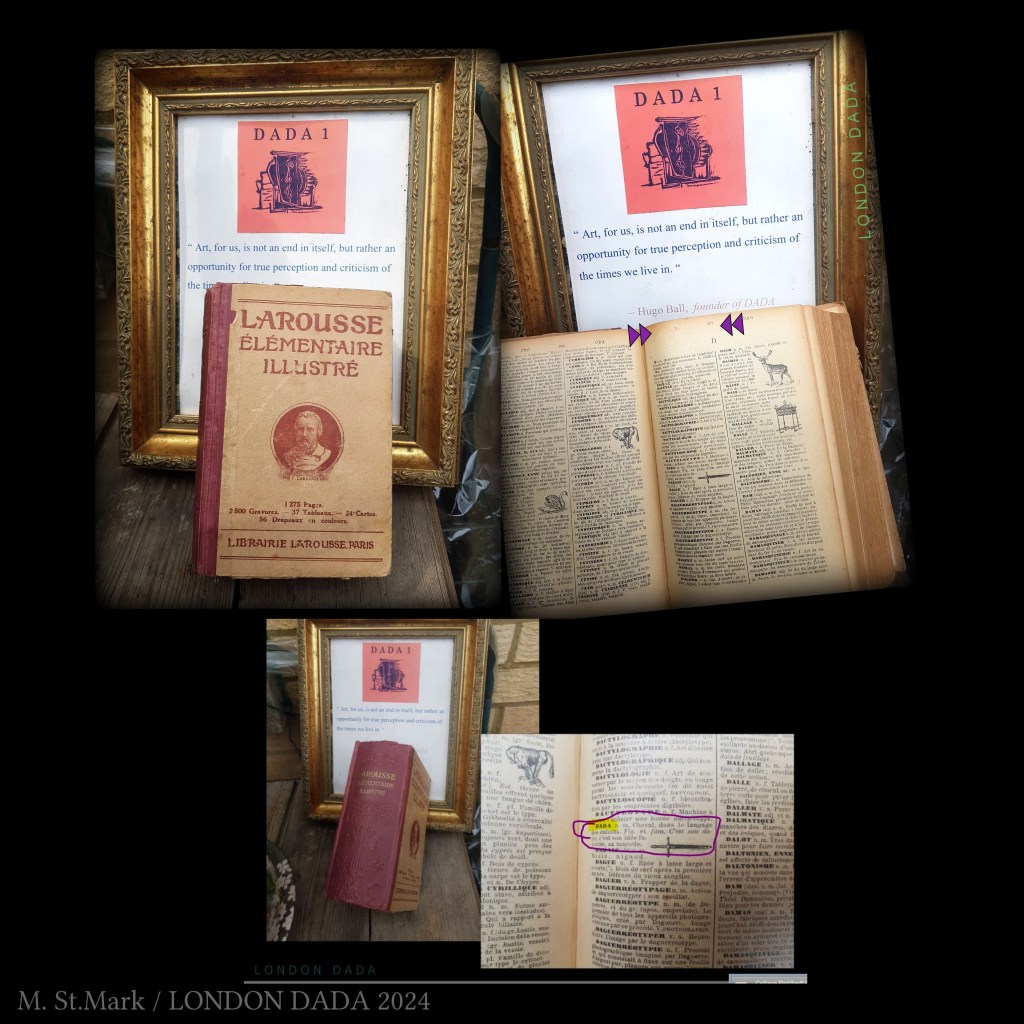
Below; the antique Larousse illustrated dictionary, identical to the one that Ball and Huelsenbeck opened at random and pointed to in 1916, that gave birth to the word DADA as the name for the radical movement that shook the art world to its core during the remainder of the 20th century.
_________________________________________________________________________

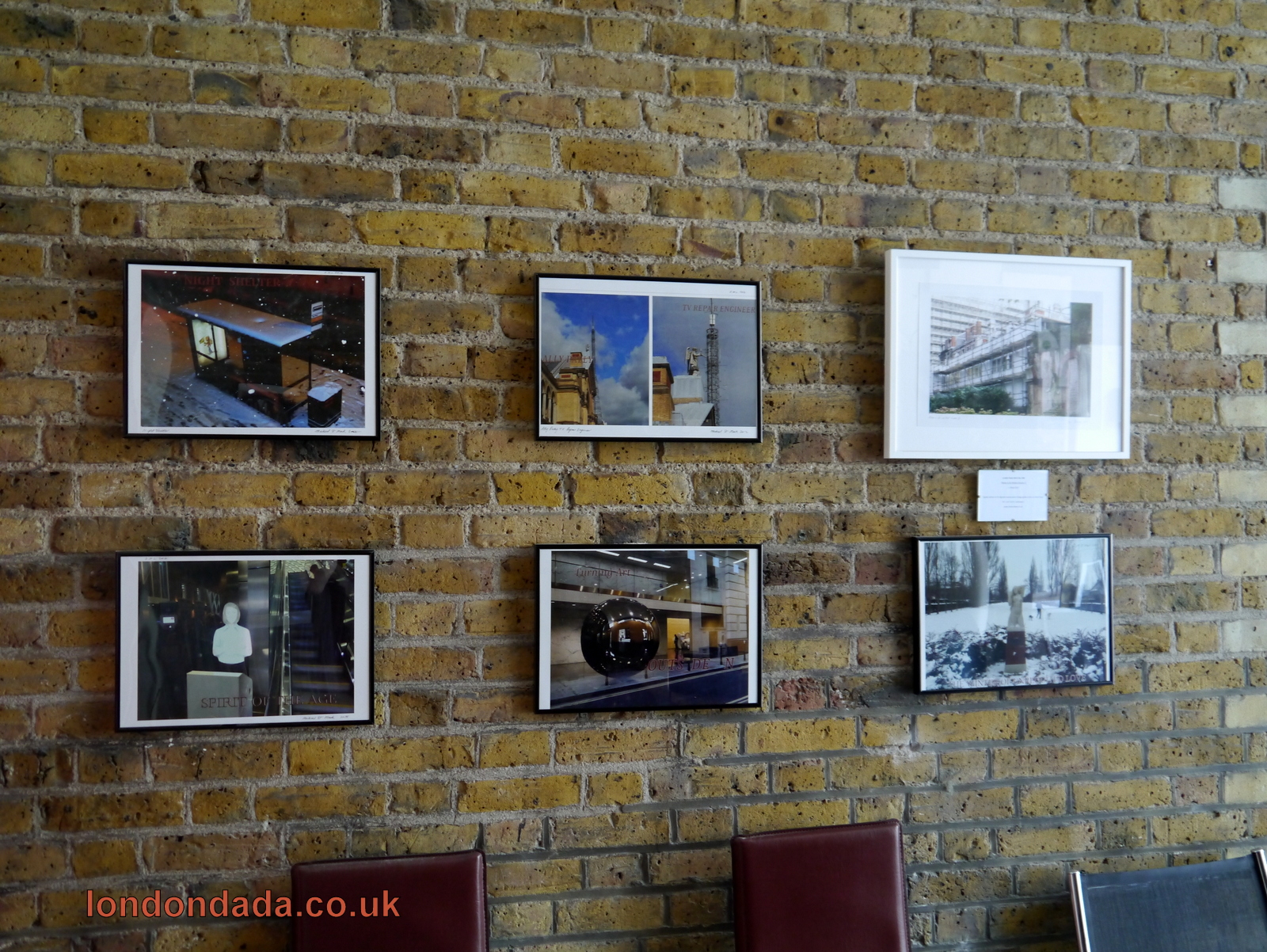
Fine art photography is a relatively new form of artistic expression; compared to the time-honored mediums of painting and sculpture, the oldest examples of fine art photography just date back to the 19th century. Indeed, it was a struggle for early fine art photographers to have their work recognized as “high” art. However, from the mid-late 20th C. onwards, photography has come to be recognized as an art form for its ability to communicate the photographer’s unique point of view and elicit profound emotional and other reactions from viewers. For this reason, I prefer to use spontaneous – happening or chance ( a major if not the underlying factor in Dada ) – street/nature photographic metaphors and symbolism, often on first glance of random events or scenes but with perceptive and concise titling release profound and often tragicomic aspects of the human condition. This could be viewed as being the instant and efficient 21st C. means for the eliciting and conveying of true perception and criticism of our times through art – Hugo Ball’s original definition of and vision for, Dada.
London Dada – “pressing the reset button in reviving and expressing the important original aims and ambitions for Dada of its founder and father; Hugo Ball “
” Hugo Ball, a former theatre director from Munich, was the initiator of the Cabaret Voltaire and thus automatically, so to speak, the father of the Dadaists. However, he left the movement just a few months later, as he felt that Dadaism was developing in the wrong direction. His initial euphoria for the new, noisy art movement gave way to incomprehension for the – as he described it – increasing nonsense of his Dada colleagues.” – Who is Who in Dada (online )
Michael St.Mark, London 2014

LONDON DADA fast-access archive website & shop
____________________________________________________________________
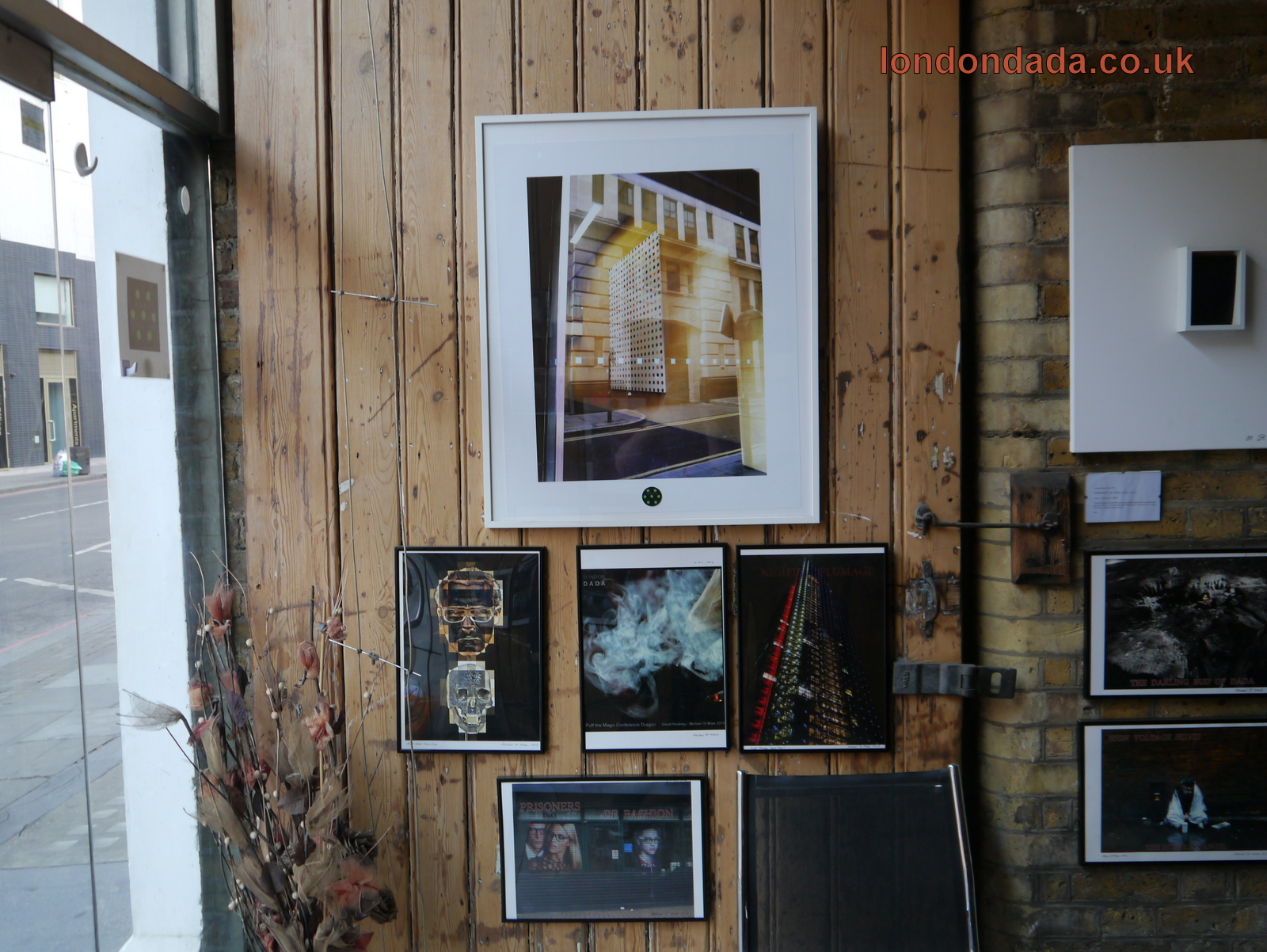
GALERIE 6191 Shoreditch
*UPDATE January 2025. Gallery closed for renovation/refit.
Enquiries; St.Mark@londonDada.com
_____________________________________________________________________
*New Exhibition wall space offered to artists of authentic voice and moral concern.
St.Mark@londondada.com



The pseudo-science of psychology, to which they had initially subscribed, sought to confirm that view.
However, in stating that feelings of oneness with the universe were “regressive” and that a sense of “oceanic” kinship with the world indicated “bad upbringing”, Freud unwittingly gave weight to that most famous of Dada maxims; ” thought is cod”

” The Art Market is a scam ”
 LONDON DADA
Pingback: London Dada Work No. 400 – Sixteen Tombstones ( Dada homage to Andy) | LONDON DADA
Hello cher Mike,
Comment va tu ?
J’espère que tu vas bien ?
Christian Curdy
+ 33 634 32 29 39
LikeLike
Ca va bein merci, Chris chance 🙂
LikeLike
Pingback: Work No. 692; Lucifer over Gaza | LONDON DADA
Pingback: The Ageist Turner Prize | LONDON DADA
Pingback: Work No. 741: The Human Condition VI | LONDON DADA
Pingback: Work No. 717; AIDNI – Still Backward after all these Years | LONDON DADA
Pingback: Work No. 875; Summer in the City | LONDON DADA
Pingback: London Dada Work No. 874; Lamborghini Starter Motor | LONDON DADA
Pingback: Work No. 871; Black & Light | LONDON DADA
Pingback: Work No. 870; Developments.. | LONDON DADA
Pingback: Work No. 718; The Price of Enlightenment | LONDON DADA
Pingback: Dada over London & the 7 tenets of Dada | LONDON DADA
Pingback: Work No. 731; This Green and Pleasant Land V | LONDON DADA blog